Best Time to Visit Tenerife: Weather Season by Season


Tenerife is called the island of eternal spring, and for good reason: it’s warm enough to visit in every month of the year. But the best time for you depends on what you want – winter sun, hiking, snow on Teide, Carnival or the warmest sea. Here is a season-by-season guide.
Tenerife weather at a glance
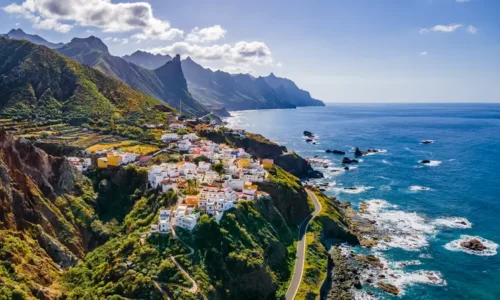
The south of the island (Costa Adeje, Los Cristianos, Playa de las Américas) is the sunniest and driest. The north (Puerto de la Cruz, La Laguna, Anaga) is greener, cooler and gets more cloud. Up in Teide National Park, above 2,000 metres, it is much colder than on the coast – often 10–15 °C cooler.
| Season | South coast (typical day) | What it’s like |
|---|---|---|
| Winter (Dec–Feb) | around 20–22 °C | Mild and sunny; cool evenings; possible snow on Teide |
| Spring (Mar–May) | around 22–24 °C | Flowers in bloom, great for hiking and sightseeing |
| Summer (Jun–Aug) | around 26–29 °C | Hot and dry in the south, busy with families |
| Autumn (Sep–Nov) | around 24–27 °C | Warmest sea, fewer crowds, very pleasant |
Best time for…
Winter sun
November to March is high season for visitors from the UK and Ireland. You’ll get beach weather on most days in the south, while it’s cold and dark at home. Christmas and New Year are especially popular – see our Christmas & New Year in Tenerife guide.
Seeing Mount Teide
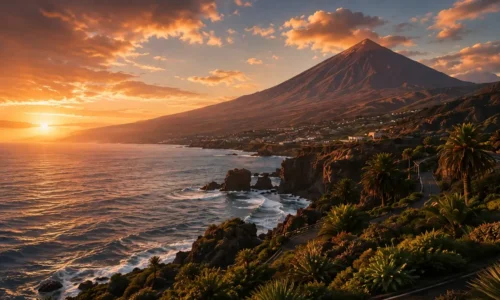
Teide is spectacular all year. In winter you may see snow on the summit; in spring and autumn the air is often crystal clear. Sunset above the clouds is magical in any season – it’s the highlight of our Masca, Teide & sunset tour. Always bring a warm layer: it’s much colder at altitude.
Hiking and sightseeing
Spring (March–May) and autumn (October–November) are ideal: comfortable temperatures for walking around Masca, the Anaga mountains and the national park, and fewer crowds than in summer.
Beach and swimming
The sea is warmest from August to October. In winter it’s cooler but still swimmable for many visitors from northern Europe.
Festivals
Carnival in Santa Cruz (February/March) is one of the biggest in the world. Three Kings parades take place on 5 January, and summer brings local fiestas in towns all over the island.
Lower prices and fewer crowds
May, June and October are often the best value – good weather, but outside the peak winter and school-holiday periods.
Things to know before you go
- Microclimates: if it’s cloudy in the north, it’s often sunny in the south – and the other way round. A local guide picks the best route for the day’s weather.
- Calima: a few times a year, hot dusty air from the Sahara makes the sky hazy for a day or two.
- Altitude: on Teide temperatures can be close to freezing on winter mornings, even when it’s 22 °C on the beach.
- Book ahead in peak weeks: Christmas, Easter and the summer holidays fill up fast.
Whenever you come – see the real Tenerife
Private tours with hotel pickup, planned around the weather on the day. From €130 per person, free cancellation up to 48 hours before.
See all private tours Teide, Masca & Los GigantesFAQ
What is the best month to visit Tenerife?
For warm weather without the summer heat, May, September and October are hard to beat. For winter sun, December to March offers mild, sunny days in the south.
Is Tenerife warm in winter?
Yes. Daytime temperatures on the south coast are usually around 20–22 °C in winter, although evenings are cooler and the mountains are cold.
When can you see snow on Mount Teide?
Snow is most likely between December and March, but it doesn’t fall every winter and can melt quickly.
When is the rainy season in Tenerife?
There is no real rainy season. Most of the little rain falls between November and February, mainly in the north of the island.
Planning your trip? Read our 7-day Tenerife itinerary and our Mount Teide guide.